Oklahoma Reg. #80007107
Roof ventilation in Sapulpa, Tulsa and Bixby that protects your shingles and your energy bill.
Ridge vents, box vents and intake ventilation, set up right.
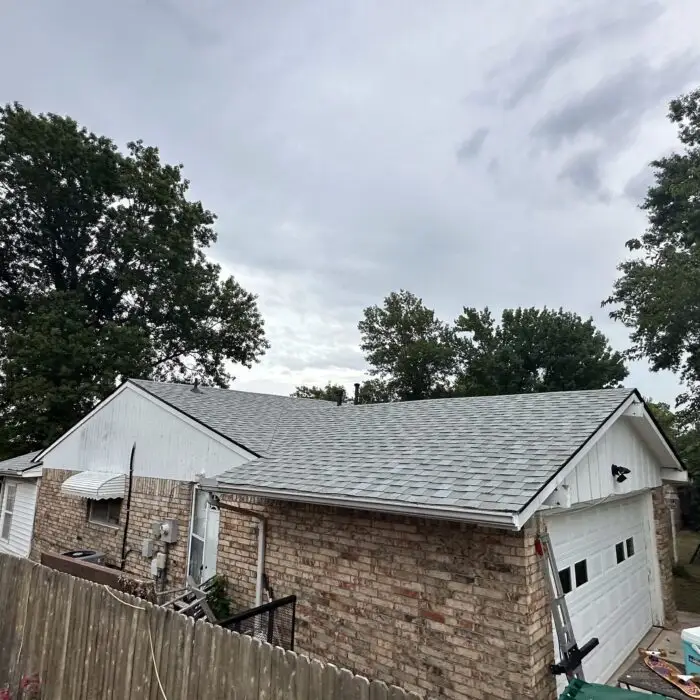
Ridge vents, box vents and intake ventilation, set up right.
Quick answer: roof ventilation
Airflow is checked at every SCOTT 1 ROOFING inspection: poor ventilation can reduce shingle life and increase energy bills. Eric Scott handles inspections personally, without an inspection fee. For an attic and roof discussion, call (539) 432-1383. Oklahoma Roofing Contractor Registration #80007107.
Roof ventilation is discussed with the roof as a system. The shingle options are rubberized asphalt from Malarkey: Highlander AR (Class 3), or Vista AR and Legacy (Class 4). A primary-residence new Malarkey install has material protection for 50 non-prorated years, transferable once. Malarkey also backs the 10-year workmanship warranty provided by SCOTT 1 ROOFING. Read the Malarkey Certified Pro Contractor #5702 document. State identification: OK Roofing Reg. #80007107.
Proper intake and exhaust ventilation helps shingles last and keeps attic heat down in Oklahoma summers. It is included with every replacement.
Good ventilation is balanced. Cool air comes in low at the soffit or eave (intake) and hot, moist air leaves high at the ridge or roof vents (exhaust). If the soffit vents are painted over or blocked by insulation, or if different vent types are mixed on one roof, air can short-circuit and the attic stays hot.
In an Oklahoma summer, a poorly vented attic bakes the shingles from below and makes the AC work harder. In winter, trapped moisture can condense on the decking. Eric checks intake and exhaust during the inspection, and ventilation is set up right as part of every Scott 1 Roofing replacement.
For ventilation concerns, Eric inspects roofs in Jenks, Bixby, Sapulpa and Broken Arrow. His work also includes Tulsa, Glenpool and Sand Springs. The full service area is available if your property is outside that group.
A row of roof vents does not by itself explain how an attic breathes. The inspection needs to consider where air enters low and where it leaves high. Eric checks intake and exhaust together. Before buying another vent, ask him to describe the path air is meant to follow through your particular attic.
Soffit openings blocked by insulation or covered with paint are part of that discussion. So is the mix of vent types already on the roof. The useful question is not simply whether the roof has vents. It is whether the intake and exhaust arrangement can work together rather than short-circuiting.
An upstairs room that stays warm in summer is worth mentioning. So are early curling shingles or an attic that feels very hot. These are inspection clues, not a reason to promise a specific reduction in the electric bill. Tell Eric what you have noticed and let the roof and attic inspection guide the scope.
Winter can present a different picture: frost on attic nails, moisture on decking or a musty smell. Keep track of when you noticed it. Those details help frame the discussion about trapped moisture. Do not assume that a single photograph proves a rain leak or proves that adding an exhaust vent is the complete answer.
Ask where the intake is now, where exhaust leaves and whether either route is blocked. Ask which existing vents would remain if the layout changes. You should be able to understand the proposal without learning a list of product names. Ridge vents and box vents are options named on this page, not a reason to put every type on one roof.
Keep the conversation tied to your attic rather than a generic vent count. A plan that talks only about openings on top of the roof has not yet explained the lower intake path. Eric checks both. Have him walk through what he found so the reason for the proposed work is clear.
SCOTT 1 ROOFING includes ventilation in a full roof replacement. Ask how that part of the project relates to the soffit intake and the exhaust already on the house. It should not be an unexplained line that you only notice after choosing shingles. The shingle system and attic airflow deserve separate questions in the same roof conversation.
If your immediate concern is attic moisture rather than a worn-out roof, start by describing that concern. The free inspection is the place to discuss it. Keep any proposed ventilation work distinct from an assumption that all shingles must be replaced, and ask which observed conditions support the recommendation Eric makes.
Describe your ventilation question in the form, or phone (539) 432-1383. SCOTT 1 ROOFING receives the inquiry directly; there is no call center.
Eric checks intake as well as exhaust. Painted-over soffit vents or insulation blocking the intake can prevent the intended airflow, so adding a vent high on the roof is not the only question to address.
Frost or moisture on attic nails and decking is a reason to discuss ventilation during an inspection. Describe when you see it and ask Eric what he finds before choosing a scope of work.
The company’s manufacturer credential is posted online for you to inspect: Malarkey Certified Pro Contractor #5702, valid through May 5, 2027. Oklahoma Roofing Contractor Registration #80007107 is also held by SCOTT 1 ROOFING. Both identify the roofer you are speaking with about the attic and roof.
On a new Malarkey shingle installation, workmanship is warranted by SCOTT 1 ROOFING for 10 years and backed by Malarkey. For materials, Malarkey’s term is 50 years non-prorated. It is for primary residences only and allows transfer once. The Malarkey document is mailed within 90 days of finishing. Ask separately about terms for ventilation-only work.
Rubberized asphalt shingles from Malarkey are Eric’s shingle system. The ratings differ: Highlander AR is Class 3, while Legacy and Vista AR are impact-rated Class 4. The inspection is free, includes discussing which line fits your home and spending plan, and leads to a written quote before installation begins.
Ventilation is included on a full replacement, along with new underlayment and flashing. You cannot see rotten decking until tear-off. The quote includes the first 3 sheets, with a disclosed $89-per-sheet charge after that. Eric tells you before proceeding; exceeding 10 sheets total calls for your signed decking agreement first.
Poor ventilation traps heat and moisture, which can shorten shingle life and void warranties.
Yes. Scott 1 Roofing sets up ventilation with every replacement.
Either can work when it is sized right and paired with enough soffit intake. Mixing exhaust types on one roof is what usually causes trouble.
Manufacturers expect proper attic ventilation, which is one reason Scott 1 Roofing sets it up with every new roof.
Gutters · Chimney repair · Roof replacement · Emergency dry-in · Skylights · Commercial roofing · Rubberized asphalt shingles · Class 4 roofing · Siding · Roof repair · Metal roofing · Insurance claims · Storm & hail damage
Have we worked on your roof? You can choose whether to share your story and how your name appears.
Call, text or send the form. You will hear back from Scott 1 Roofing, not a call center.
(539) 432-1383Hours: 24 hours Monday–Saturday. Closed Sunday.